

You wake up wanting pancakes, open the fridge and find the milk carton empty. Good news: pancakes without milk are not only possible, they are delicious. This recipe uses water in place of milk and still makes a tall stack of light, fluffy, golden pancakes in about 20 minutes.
It is also a useful recipe for anyone avoiding dairy. Swap the butter for oil and you have dairy-free pancakes that nobody at the table will guess are any different. Below you will find the method, the science behind it and plenty of tips for perfect pancakes every time.
Table of Contents
Can You Really Make Pancakes Without Milk?
Yes, and they work very well. In a standard pancake recipe, milk does three jobs. It provides liquid to hydrate the flour, a little fat for tenderness, and some sugar that helps the pancakes brown.
Water easily handles the first job. Melted butter or oil replaces the fat, and a couple of tablespoons of sugar take care of the browning. The result is a pancake that is slightly lighter and less rich than one made with milk, with a clean flavor that lets your toppings shine.
Many cooks are surprised to find that pancakes without milk can actually be fluffier. Water makes a thinner, lighter batter, and the baking powder can lift it more easily. The pancakes come out tall, soft and airy.
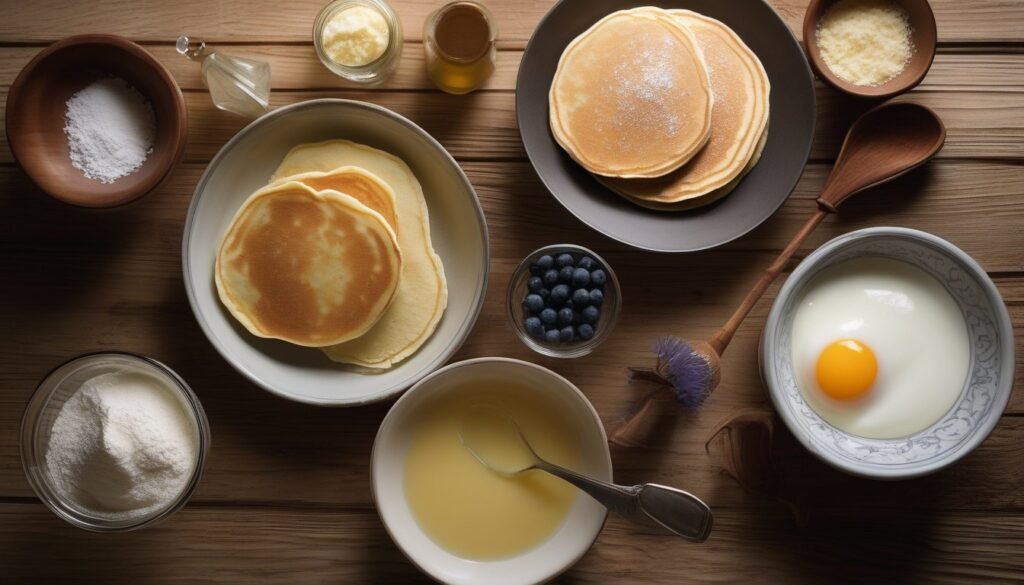
Ingredients for This Pancake Recipe
- All-purpose flour: the base of the batter. Spoon it into the cup and level it, or weigh it for best results.
- Sugar: adds a little sweetness and, just as importantly, helps the pancakes turn golden.
- Baking powder: the key to fluffy pancakes. Check the date on the tub, because old baking powder loses strength.
- Salt: a small amount brings out the flavor and balances the sweetness.
- Water: room temperature water mixes most evenly with the melted butter.
- Egg: gives the pancakes structure and richness.
- Melted butter or oil: butter tastes richer, while oil keeps the recipe dairy-free.
- Vanilla extract: adds a warm, bakery-style aroma that makes up for the missing milk.
Milk Substitutes for Pancakes
Water is the simplest swap and works perfectly in this recipe. If you have other liquids at home, here is how they behave in a pancake batter:
- Plant milks: oat, soy and almond milk can replace water one for one. Oat milk gives the creamiest result.
- Sparkling water: the bubbles add extra lift for very airy pancakes. Mix the batter just before cooking.
- Yogurt and water: use 1/2 cup yogurt with 3/4 cup water for a tangy, buttermilk-style flavor. Add 1/2 teaspoon of baking soda.
- Coconut milk: rich and slightly sweet. Thin canned coconut milk with an equal amount of water.
- Orange juice: adds a fresh citrus flavor. Use half juice and half water so the pancakes do not brown too fast.
The Science Behind Fluffy Pancakes
Understanding what happens in the pan makes it much easier to get great results. Fluffy pancakes depend on gas bubbles that form in the batter and then get trapped as it sets.
Baking powder is a mix of an acid and an alkali, usually with a little starch to keep them dry. When it meets water, the two react and release carbon dioxide. Most baking powder sold today is double-acting, which means it reacts once when it gets wet and again when it gets hot. That second burst of bubbles happens in the pan and is what makes the pancakes puff up so quickly.
The egg and flour then set around those bubbles. Proteins in the egg firm up with heat, and starch in the flour swells and thickens. If the batter is too thin, the bubbles escape before it sets. If it is overmixed and too elastic, the bubbles cannot expand. That is why a slightly lumpy, medium-thick batter and a moderately hot pan give the best rise.
Sugar plays a bigger role than you might expect. Without the natural sugar in milk, pancakes made with water can look pale. The two tablespoons of sugar in this recipe caramelize on contact with the pan and give the classic golden-brown color.
Equipment for Making Pancakes
You can make great pancakes with very basic kitchen tools. A large bowl, a whisk, a measuring cup and a thin, wide spatula are all you need.
A good nonstick frying pan or a flat griddle makes cooking much easier. Heavy pans, such as cast iron, hold an even temperature and produce beautifully uniform color, but they take longer to heat and need a little more oil. An electric griddle is ideal for big batches, because you can set it to about 375°F (190°C) and cook eight pancakes at once.
A 1/4 cup measure or a small ladle helps you pour pancakes of the same size, so they all cook at the same speed. A squeeze bottle is another handy option, especially if you want to make fun shapes for children.
How to Make Pancakes Without Milk
Here is the full method, with the details that make a real difference.
1. Mix the Dry Ingredients
In a large bowl, whisk together the flour, sugar, baking powder and salt. Whisking spreads the baking powder evenly, so every pancake rises the same way. It also breaks up any lumps in the flour.
2. Whisk the Wet Ingredients
In a separate jug or bowl, whisk the water, egg, melted butter and vanilla until the egg is fully broken up. If your butter is hot, let it cool for a minute first so it does not start to cook the egg.
3. Combine Gently
Make a well in the center of the dry ingredients and pour in the wet mixture. Stir with a whisk or spatula just until no dry flour remains. Small lumps are perfectly fine and will disappear during cooking.
Overmixing is the biggest cause of flat, chewy pancakes. Stirring too much develops gluten, which makes the pancakes tough and stops them from rising well. Ten to fifteen gentle stirs are usually enough.
4. Rest the Batter
Let the batter rest for 5 minutes while the pan heats. During this time, the flour absorbs the water and the baking powder starts to work. You will see small bubbles appear on the surface, and the batter will thicken slightly.
5. Heat the Pan Properly
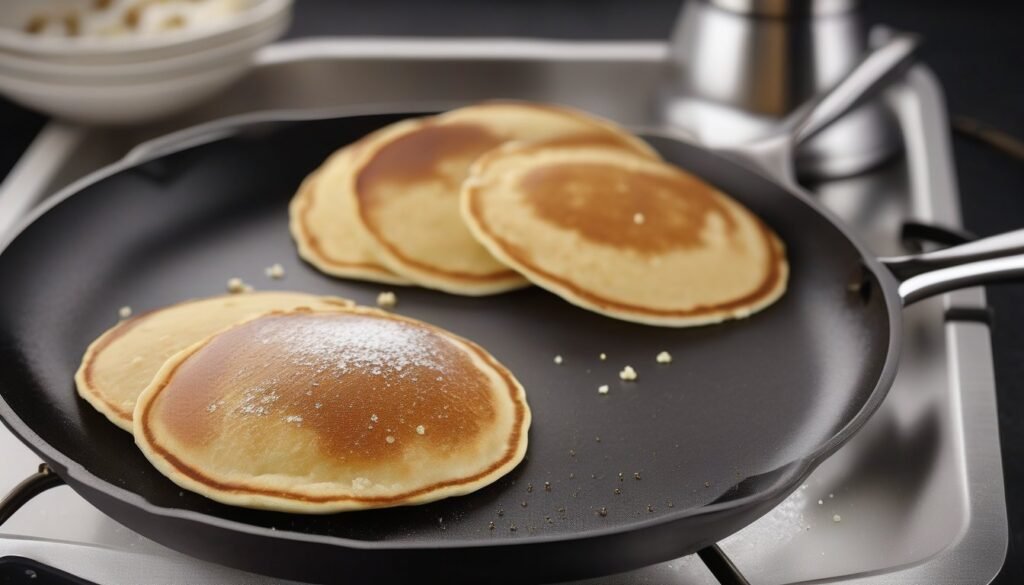
Place a nonstick pan or griddle over medium heat for 2 to 3 minutes. Test it by flicking in a few drops of water. They should sizzle and dance across the surface. If they disappear instantly, the pan is too hot. If they just sit there, give it another minute.
Brush the pan lightly with butter or oil, then wipe away the excess with a paper towel. Too much fat makes the edges crisp and uneven instead of soft and golden.
6. Cook the Pancakes
Pour 1/4 cup (60 ml) of batter into the pan for each pancake, leaving space between them. Cook for 2 to 3 minutes, until bubbles form across the surface, pop and leave small holes, and the edges look set and dry.
Slide a thin spatula under the pancake and flip it in one quick motion. Cook the second side for 1 to 2 minutes, until golden. Do not press down on the pancakes with the spatula, as this pushes out the air and makes them dense.
7. Keep Them Warm
Transfer cooked pancakes to a baking sheet in a 200°F (95°C) oven while you finish the batch. Lay them in a single layer rather than in a stack, so they stay fluffy instead of steaming.
Tips for Perfectly Fluffy Pancakes
- Use fresh baking powder: test it by stirring a spoonful into hot water. It should bubble vigorously.
- Do not overmix: a lumpy batter makes the lightest pancakes.
- Control the heat: medium heat lets the inside cook before the outside burns.
- Flip only once: repeated flipping knocks the air out.
- Adjust the batter: if it is too thick to pour, add a tablespoon of water. If it spreads too thin, add a tablespoon of flour.
- Cook a test pancake: the first one tells you whether to adjust the heat or the batter.
How to Make Dairy-Free Pancakes
This pancake recipe is already milk-free. To make it fully dairy-free, simply use a neutral oil, such as sunflower or canola, in place of the butter, and grease the pan with oil too. Check that your toppings are dairy-free as well.
For egg-free pancakes, replace the egg with a flax egg made from 1 tablespoon of ground flaxseed and 3 tablespoons of water, rested for 5 minutes. The pancakes will be slightly denser but still tender.
If you are cooking for someone with a milk allergy, read every label carefully, as some baking powders, margarines and chocolate chips contain milk. The NHS has a helpful overview of eating a balanced diet if you are planning dairy-free meals.
Topping Ideas
Pancakes without milk have a clean, light flavor, so they suit almost any topping.
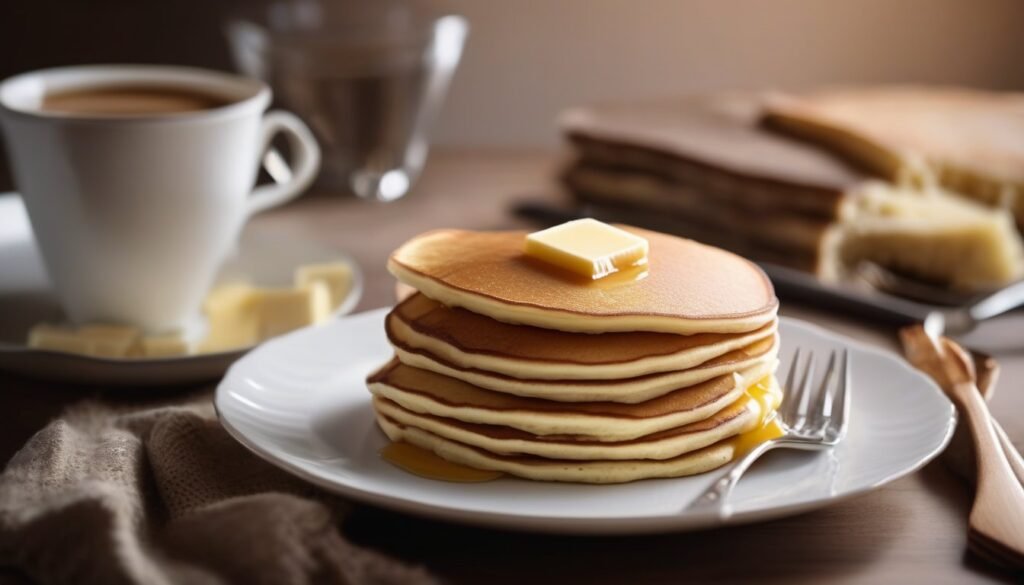
- Classic: butter and warm maple syrup.
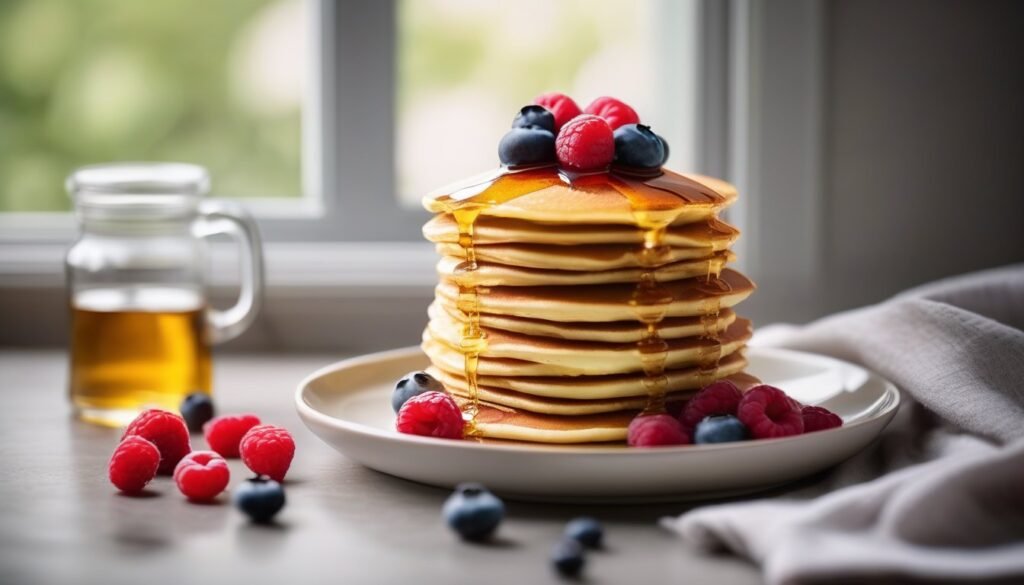
- Fruity: fresh berries, sliced banana and a drizzle of honey.
- Chocolate: chocolate chips added to the batter in the pan, with a dusting of powdered sugar.
- Warm fruit: our air fryer cinnamon apples make a perfect fall topping.
- Protein: a spoon of peanut butter or Greek yogurt for a more filling breakfast.
- British style: a squeeze of lemon and a sprinkle of sugar.
5 Fun Variations
- Blueberry: drop a few blueberries onto each pancake right after pouring the batter.
- Banana: mash one ripe banana into the wet ingredients and reduce the water by 2 tablespoons.
- Cinnamon: add 1 teaspoon of ground cinnamon to the dry ingredients.
- Chocolate: replace 2 tablespoons of flour with cocoa powder and add 1 extra tablespoon of sugar.
- Lemon: add the zest of one lemon to the batter for a bright, fresh flavor.
Cooking Pancakes for a Crowd
This pancake recipe doubles or triples easily. Mix the batter in a large bowl and keep the quantities in the same proportions. If you make a very large batch, mix it in two rounds so the baking powder in the second half stays fresh while you cook the first.
Set up your kitchen before you start. Heat the oven to 200°F (95°C), place a wire rack on a baking sheet inside it, and lay finished pancakes on the rack in a single layer. Air can then circulate around them, so they stay warm without turning soggy. Use two pans, or a griddle, to cut the cooking time in half.
Put the toppings out on the table so everyone can build their own stack. A pancake bar with syrup, fruit, yogurt, nut butter and chocolate chips keeps breakfast relaxed and makes the meal feel special, even on an ordinary weekend.
What to Serve With Pancakes
For a full brunch, serve your pancakes with crispy bacon or sausages, scrambled eggs and a bowl of fresh fruit. Our golden air fryer breakfast potatoes are another great savory side that cooks while you work at the stove.
Fresh orange juice, coffee or a pot of tea complete the table. For something lighter, pair a short stack with Greek yogurt and berries for extra protein.
Making Ahead, Storing and Freezing
The batter is best used within 30 minutes, because the baking powder loses power as it sits. For a quick morning, mix the dry ingredients the night before and keep them covered. In the morning, just whisk in the wet ingredients.
Cooked pancakes without milk keep in an airtight container in the fridge for up to 3 days. To freeze, let them cool completely, then lay them on a tray in a single layer and freeze until firm. Transfer them to a freezer bag with parchment between the layers. They keep for up to 2 months.
Reheat leftover fluffy pancakes in the toaster, in a dry pan over low heat, or in a 350°F (175°C) oven for about 8 minutes. The microwave works too, but the pancakes will be softer.
Common Problems and Fixes
Why are my pancakes flat?
Flat pancakes usually come from old baking powder, overmixed batter or batter that sat for too long. Use fresh baking powder, stir only until combined, and cook the batter within half an hour.
Why are my pancakes raw in the middle?
The pan is too hot. The outside browns before the inside has time to cook. Lower the heat slightly and give each pancake a little longer before flipping.
Why are my pancakes rubbery?
Too much mixing develops gluten and makes them chewy. Next time, stir until just combined and leave the lumps in.
Pancakes Without Milk FAQ
Do pancakes taste different without milk?
They taste slightly lighter and less rich. The vanilla and melted butter make up for most of the difference, and with toppings, very few people notice.
Can I make pancakes without milk and eggs?
Yes. Use a flax egg in place of the egg and oil instead of butter. Add an extra 1/2 teaspoon of baking powder to help them rise.
How many pancakes does this recipe make?
It makes about 10 medium pancakes, which is enough for 3 to 4 people.
Can I use self-rising flour?
Yes. Leave out the baking powder and salt, as self-rising flour already contains both.
Looking for another sweet breakfast bake? Try a slice of our chocolate chip banana bread.
This recipe was developed by Chef Crispy, the AI chef at Crispy Fork, and reviewed before publishing. Pans and stovetops vary, so cook a test pancake first and adjust the heat.
Pancakes Without Milk: 10 Fluffy, Easy Pancakes
Description
Light, fluffy pancakes made with water instead of milk, ready in about 20 minutes.Ingredients
Instructions
-
Whisk the flour, sugar, baking powder and salt in a large bowl.
-
In a jug, whisk the water, egg, melted butter and vanilla.
-
Pour the wet mixture into the dry and stir until just combined. Rest for 5 minutes.
-
Heat a lightly greased pan over medium heat. Pour in 1/4 cup (60 ml) of batter per pancake.
-
Cook for 2 to 3 minutes until bubbles appear, then flip and cook for 1 to 2 minutes more.
-
Serve warm with your favorite toppings.
Note
Use oil instead of butter for dairy-free pancakes. Keep cooked pancakes warm in a 200°F (95°C) oven.
